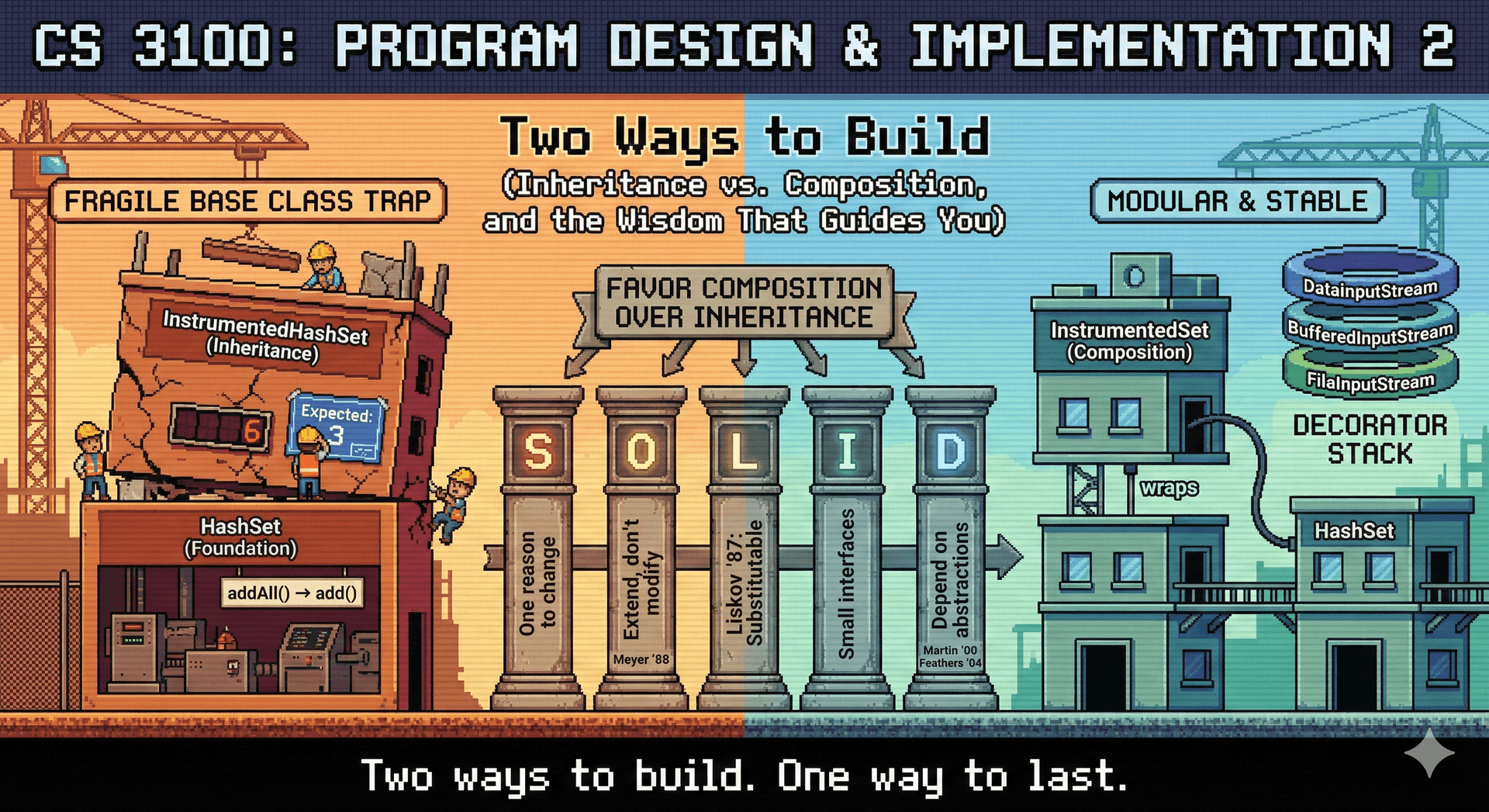
CS 3100: Program Design and Implementation II
Lecture 8: Changeability III — Principles for Inheritance
©2025 Jonathan Bell & Ellen Spertus, CC-BY-SA
Poll: Have you read any Effective Java?
A. Never heard of it
B. Not yet
C. I've found it online
D. I've skimmed parts
E. I've read 1 or 2 items
F. I've read many items

Text espertus to 22333 if the
URL isn't working for you.
Announcements
-
The practice quiz has been posted on the shared Canvas site, as announced.
-
The real quiz is on February 2 (next Monday).
- It is closed-note and on paper.
- Bring something to write with.
- It covers material through today's lecture and Lab 3.
- No electronics (including headphones) are allowed.
-
There will be an exercise in class on Wednesday requiring a writing implement.
-
It's a good idea to always bring pen and paper to class.
A Second Look at Stamp Coupling
class EmailService {
    void sendNotification(Submission submission) {
        // Only uses 3 fields but receives entire complex structure
        String toEmail = submission.student.email;        // ✓ Used
        String name = submission.student.name;            // ✓ Used
        String assignmentName = submission.assignment.name; // ✓ Used
        String body = "Hi " + name + ", you received feedback on " + assignmentName;
        send(toEmail, "New Feedback", body);
    }
}
⚠ EmailService depends on the Submission structure.
-
Passing a user-defined type isn't bad.
-
It's bad that the type isn't well encapsulated.
-
Just be aware that there is coupling.
Learning Objectives
After this lecture, you will be able to:
- Apply the SOLID principles to evaluate and improve object-oriented designs
- Explain why composition is generally preferred over inheritance and identify cases where each is appropriate
- Describe rules for safely implementing inheritance in your own code
- Define the Decorator pattern and explain its relationship to design for change
SOLID Principles Guide Decisions About Class Design
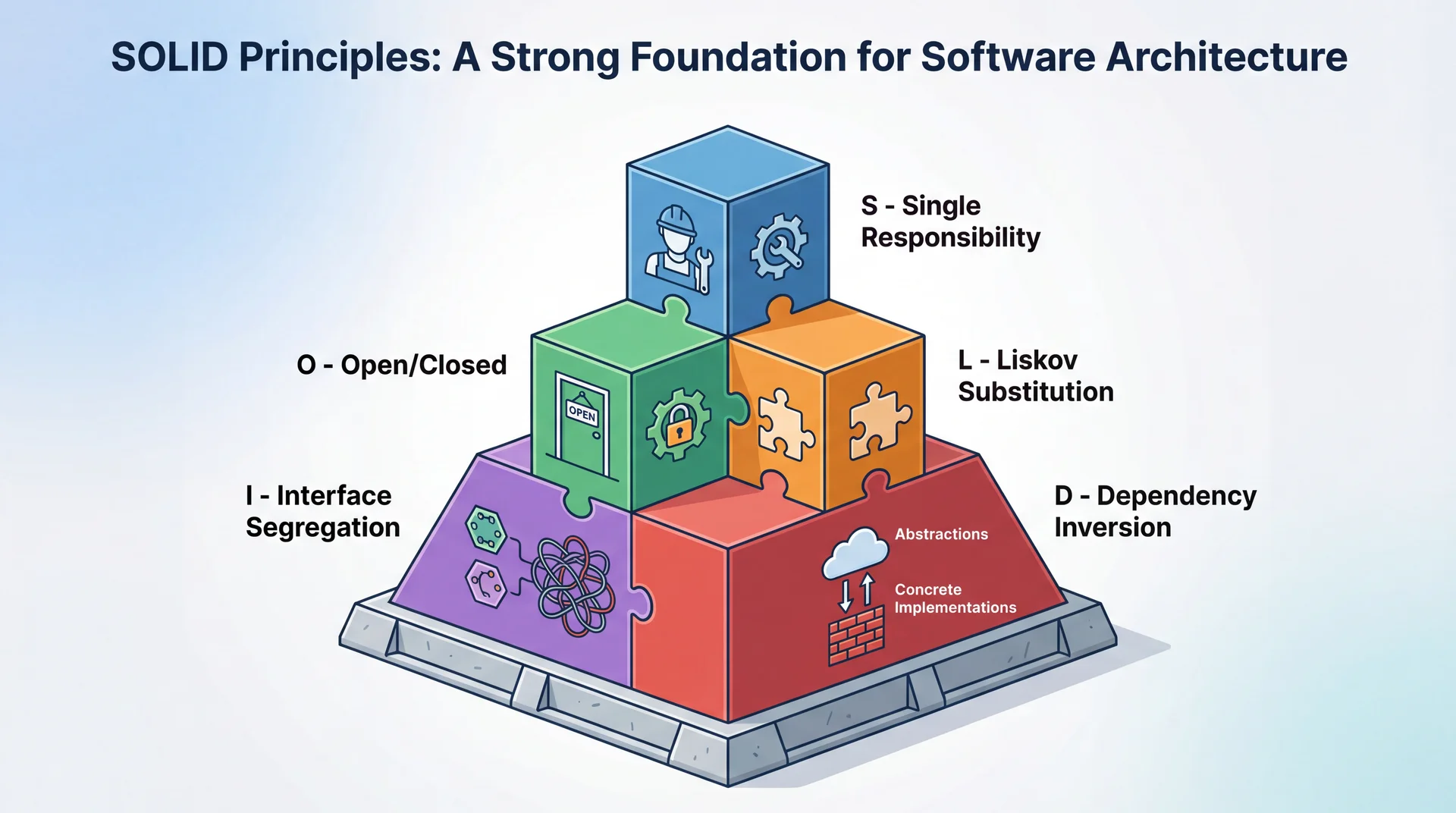
Classes With Multiple Responsibilities Are Hard to Change
Single Responsibility Principle: "A class should have only one reason to change."
This is cohesion applied to classes. A class with a single responsibility is easier to understand, test, and modify.
// Violates SRP - five reasons to change!
public class SubmissionService {
    public void processSubmission(Submission submission) {
        TestResult testResult = runTests(submission);        // Testing logic
        LintResult lintResult = lintSubmission(submission);  // Linting logic
        GradingResult grade = gradeSubmission(submission, testResult, lintResult);  // Grading
        saveSubmission(submission, grade);                   // Persistence logic
        sendNotification(submission.student, grade);         // Notification logic
    }
}
SOLID: Single-Responsibility Principle
Delegation Separates Concerns Into Focused Classes
public class SubmissionProcessor {
    private final TestRunner testRunner;
    private final Linter linter;
    private final Grader grader;
    private final SubmissionRepository repository;
    private final NotificationService notifier;

    public void processSubmission(Submission submission) {
        TestResult testResult = testRunner.run(submission);
        LintResult lintResult = linter.analyze(submission);
        GradingResult gradeResult = grader.grade(submission, testResult, lintResult);
        repository.save(submission, gradeResult);
        notifier.notify(submission.student, gradeResult);
    }
}
✓ Each class has one job. Changes to linting don't touch testing or grading code.
SOLID: Single-Responsibility Principle
Can you create a subtype without modifying existing code?
public interface IoTDevice {
  void identify();
  boolean isAvailable();
}

public class Light implements IoTDevice {
  // ... implementation ...
}
A. Yes, for both types
B. Only for IoTDevice
C. Only for Light
D. Not for either
Text espertus to 22333 if the
URL isn't working for you.
SOLID: Open-Closed Principle
Good Modules Can Be Extended Without Being Modified
Open/Closed Principle: "Software entities should be open for extension but closed for modification."
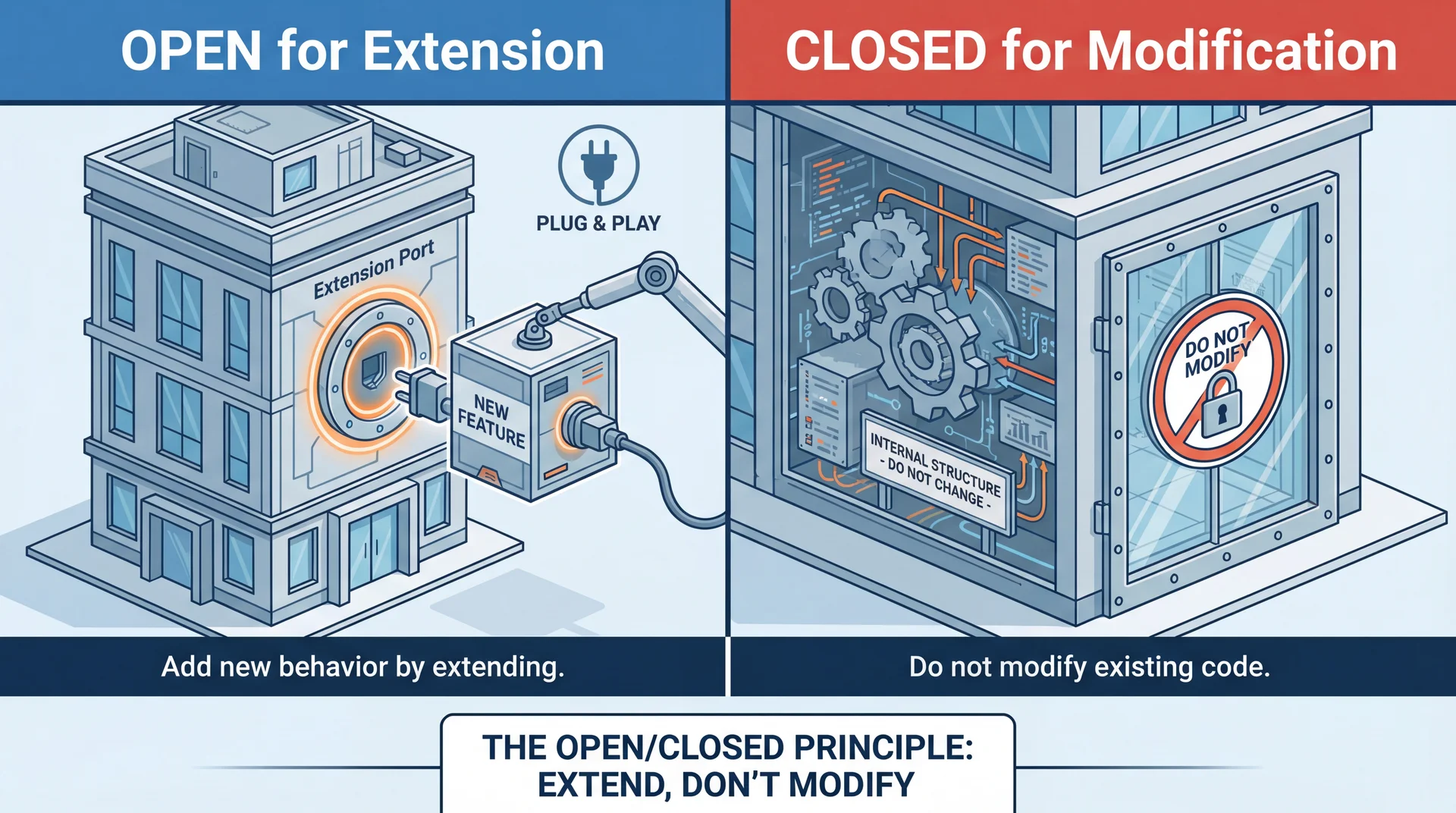
SOLID: Open-Closed Principle
Interfaces Enable Extension Without Modification
// Existing interface - OPEN for extension, CLOSED for modification
public interface IoTDevice {
    void identify();
    boolean isAvailable();
}

// Existing implementation - works, don't touch it
public class Light implements IoTDevice {
    // ... implementation ...
}
// OPEN for extension - add new device types freely!
public class SmartThermostat implements IoTDevice {
    @Override
    public void identify() { /* Flash display */ }

    @Override
    public boolean isAvailable() { return true; }

    // New behavior specific to thermostats
    public void setTemperature(int temp) { /* ... */ }
}
Adding SmartThermostat doesn't require changing IoTDevice or Light.
SOLID: Open-Closed Principle
Poll: Which can be subtypes of Mammal?
A. Bird
B. Fish
C. Person
D. Plant
E. Cat
Text espertus to 22333 if the
URL isn't working for you.
SOLID: Liskov Substitution Principle
Subclasses Must Be Substitutable for Their Parent Classes
Liskov Substitution Principle: Objects of a supertype should be replaceable with objects of its subtypes without breaking the application.
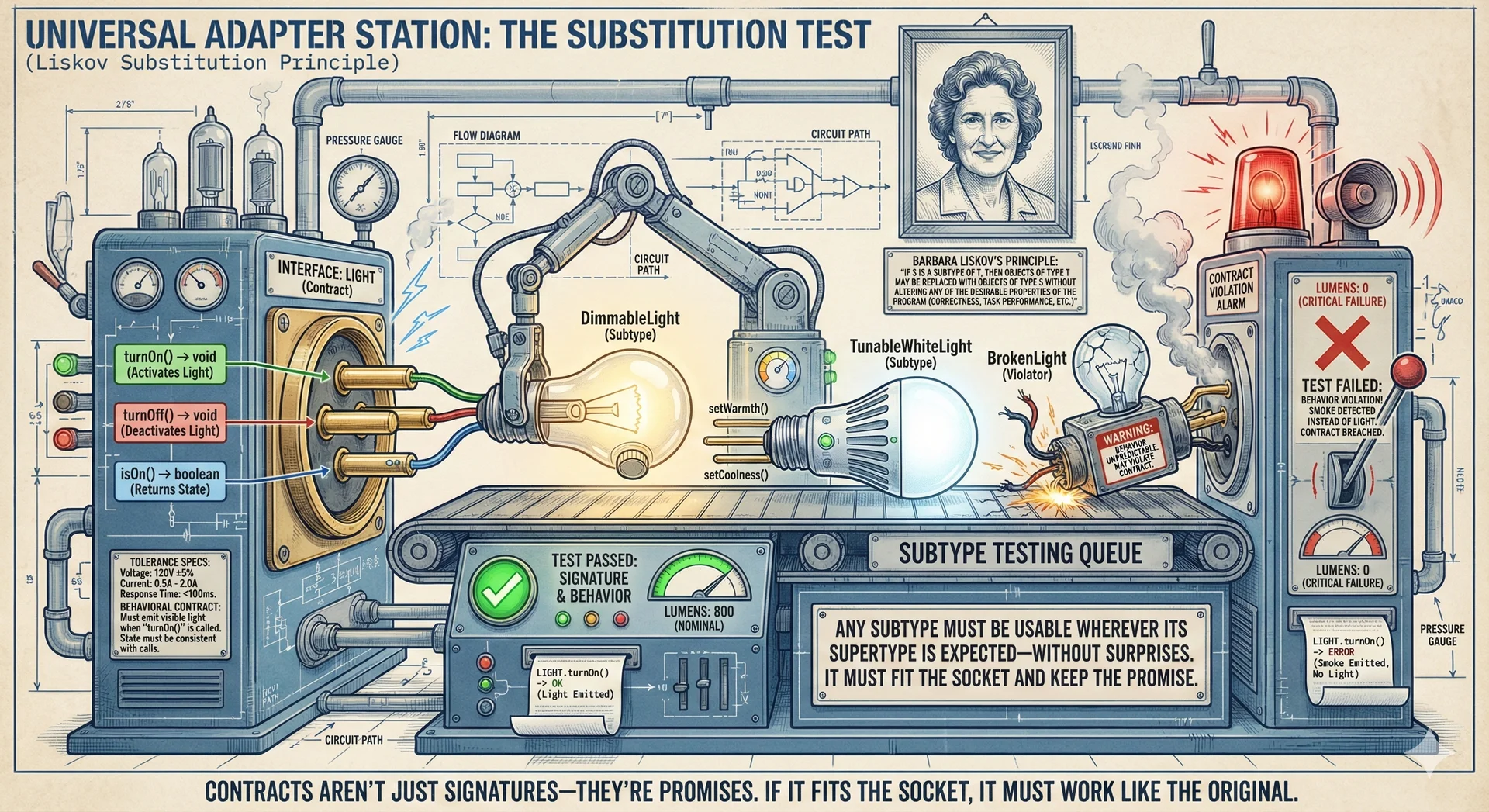
SOLID: Liskov Substitution Principle
Subclasses That Break Expectations Break All Calling Code
Good: LSP preserved
public class DimmableLight extends Light {
  private int brightness = 100;

  @Override
  public void turnOn() {
    // Honor contract by turning on light
    super.turnOn();
    // Can also add dimming capability
  }

  public void setBrightness(int b) {
    this.brightness = b;
  }
}
Bad: LSP violated
public class BrokenLight extends Light {
  @Override
  public void turnOn() {
    // Does not honor contract!
    throw new UnsupportedOperationException(
      "This light can't be turned on!");
  }
}
Code that calls light.turnOn() shouldn't need to check if it's a BrokenLight first.
SOLID: Liskov Substitution Principle
Poll: What type of interface(s) to prefer?
A: One large interface
public interface SmartDevice {
    void turnOn();
    void turnOff();
    void setBrightness(int level);
    void setColorTemperature(int temp);
    void setFanSpeed(int speed);
}
B: Many small interfaces
public interface Switchable {
    void turnOn();
    void turnOff();
}

public interface Dimmable {
    void setBrightness(int level);
}

public interface ColorAdjustable {
    void setColorTemperature(int temp);
}
SOLID: Interface Segregation Principle
Large Interfaces Force Clients to Depend on Methods They Don't Use
Interface Segregation Principle: "Clients should not be forced to depend on interfaces they don't use."
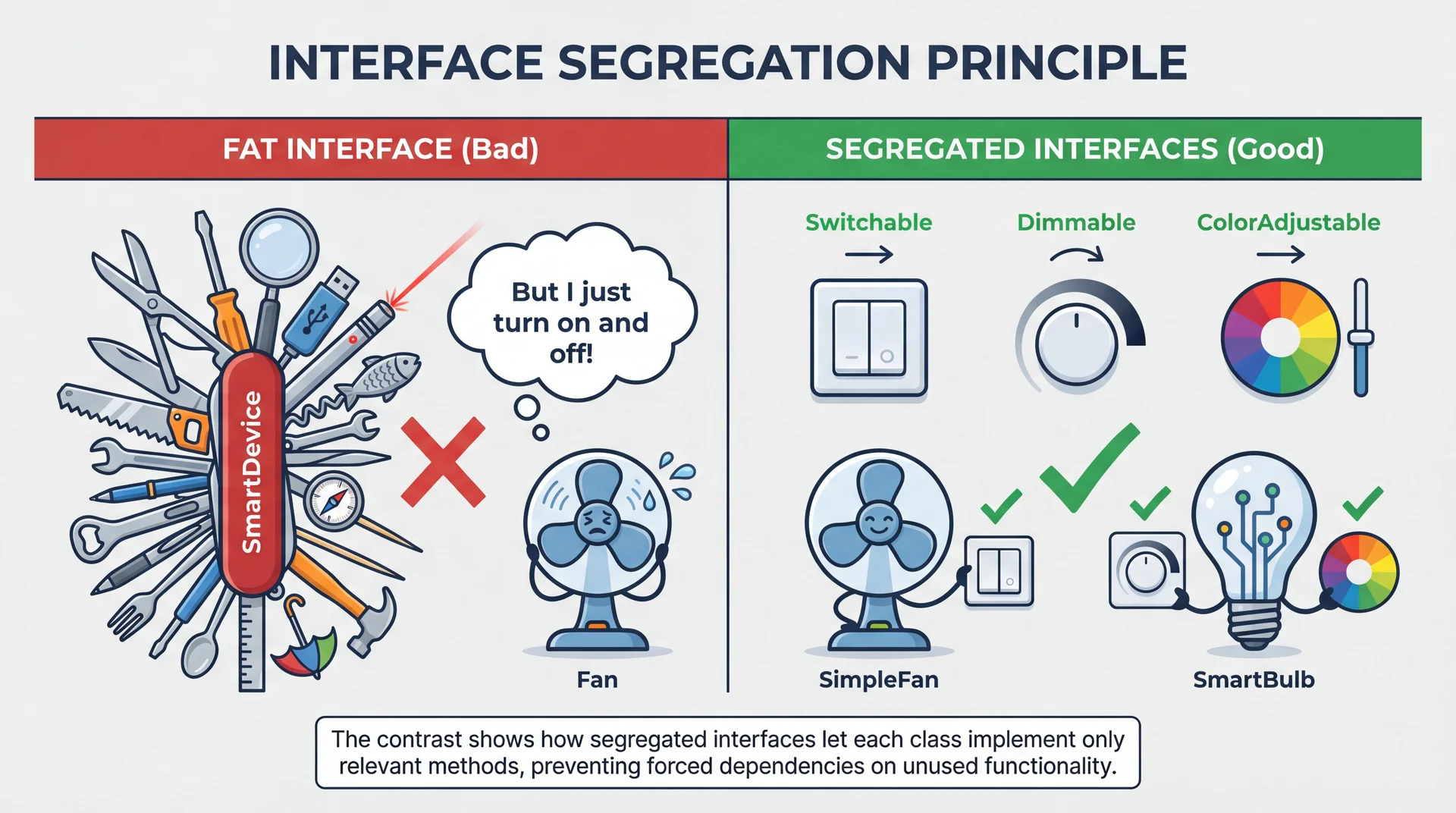
SOLID: Interface Segregation Principle
Smaller Interfaces Reduce Unnecessary Dependencies
// Bad: Monolithic interface
public interface SmartDevice {
    void turnOn();
    void turnOff();
    void setBrightness(int level);    // Not all devices have this!
    void setColorTemperature(int temp); // Or this!
    void setFanSpeed(int speed);       // Or this!
}

// Better: Segregated interfaces
public interface Switchable {
    void turnOn();
    void turnOff();
}

public interface Dimmable {
    void setBrightness(int level);
}

public interface ColorAdjustable {
    void setColorTemperature(int temp);
}
SOLID: Interface Segregation Principle
Classes Should Implement Only the Interfaces They Need
// Simple fan - just needs on/off
public class SimpleFan implements Switchable {
    public void turnOn() { /* start motor */ }
    public void turnOff() { /* stop motor */ }
    // No need to implement dimming or color!
}

// Smart bulb - implements all capabilities
public class SmartBulb implements Switchable, Dimmable, ColorAdjustable {
    public void turnOn() { /* ... */ }
    public void turnOff() { /* ... */ }
    public void setBrightness(int level) { /* ... */ }
    public void setColorTemperature(int temp) { /* ... */ }
}
✓ Each class implements exactly the interfaces it needs—no more, no less.
SOLID: Interface Segregation Principle
Poll: Which dependency is better?
A: Dependency on concrete type
public class UserRepository {
    private MySQL database;

    public UserRepository(MySQL database) {
        this.database = database;
    }
}
B: Dependency on abstract type
public class UserRepository {
    private Database database;

    public UserRepository(Database database) {
        this.database = database;
    }
}
SOLID: Dependency Inversion Principle
High-Level Modules Should Not Depend on Low-Level Details
Dependency Inversion Principle: "Depend on abstractions, not on concretions."
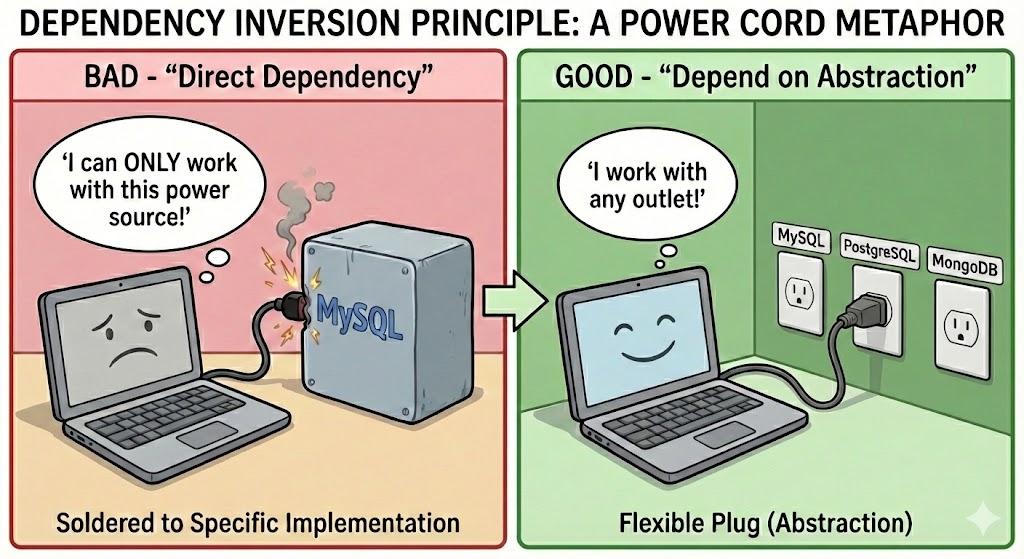
SOLID: Dependency Inversion Principle
Abstractions Allow Implementations to Be Swapped
Bad: Direct dependency
public class PawtograderSystem {
    // Hardcoded to MySQL!
    private MySQLDatabase database =
        new MySQLDatabase();

    public void saveSubmission(
            Submission s) {
        database.save(s);
    }
}
Good: Depend on abstraction
public class PawtograderSystem {
    private final Database database;

    // Accepts any Database!
    public PawtograderSystem(
            Database database) {
        this.database = database;
    }

    public void saveSubmission(
            Submission s) {
        database.save(s);
    }
}
public interface Database {
    void save(Submission submission);
}
SOLID: Dependency Inversion Principle
SOLID Principles Work Together to Enable Change
| Principle | Key Idea | Benefit |
|---|---|---|
| Single Responsibility | One reason to change | High cohesion |
| Open/Closed | Extend, don't modify | Safe evolution |
| Liskov Substitution | Subtypes honor contracts | Reliable polymorphism |
| Interface Segregation | Small, focused interfaces | Minimal dependencies |
| Dependency Inversion | Depend on abstractions | Loose coupling |
⚠ These are guidelines, not laws. Always consider trade-offs in your specific context.
Inheritance Creates Tight Coupling That Composition Avoids
Effective Java Item 18: "Favor composition over inheritance"
Subclasses Depend on Superclass Implementation Details
Imagine we want a Set that counts how many items are passed to add() and addAll():
public class InstrumentedHashSet<E> extends HashSet<E> {
    private int addCount = 0;

    @Override
    public boolean add(E e) {
        addCount++;
        return super.add(e); // return true if added
    }

    @Override
    public boolean addAll(Collection<? extends E> c) {
        addCount += c.size();
        return super.addAll(c);
    }

    public int getAddCount() { return addCount; }
}
What does getAddCount() return after s.addAll(Arrays.asList("A", "B", "C"))?
Hidden Implementation Details Cause Unexpected Behavior
InstrumentedHashSet<String> s = new InstrumentedHashSet<>();
s.addAll(Arrays.asList("A", "B", "C"));
System.out.println(s.getAddCount()); // Prints 6, not 3!
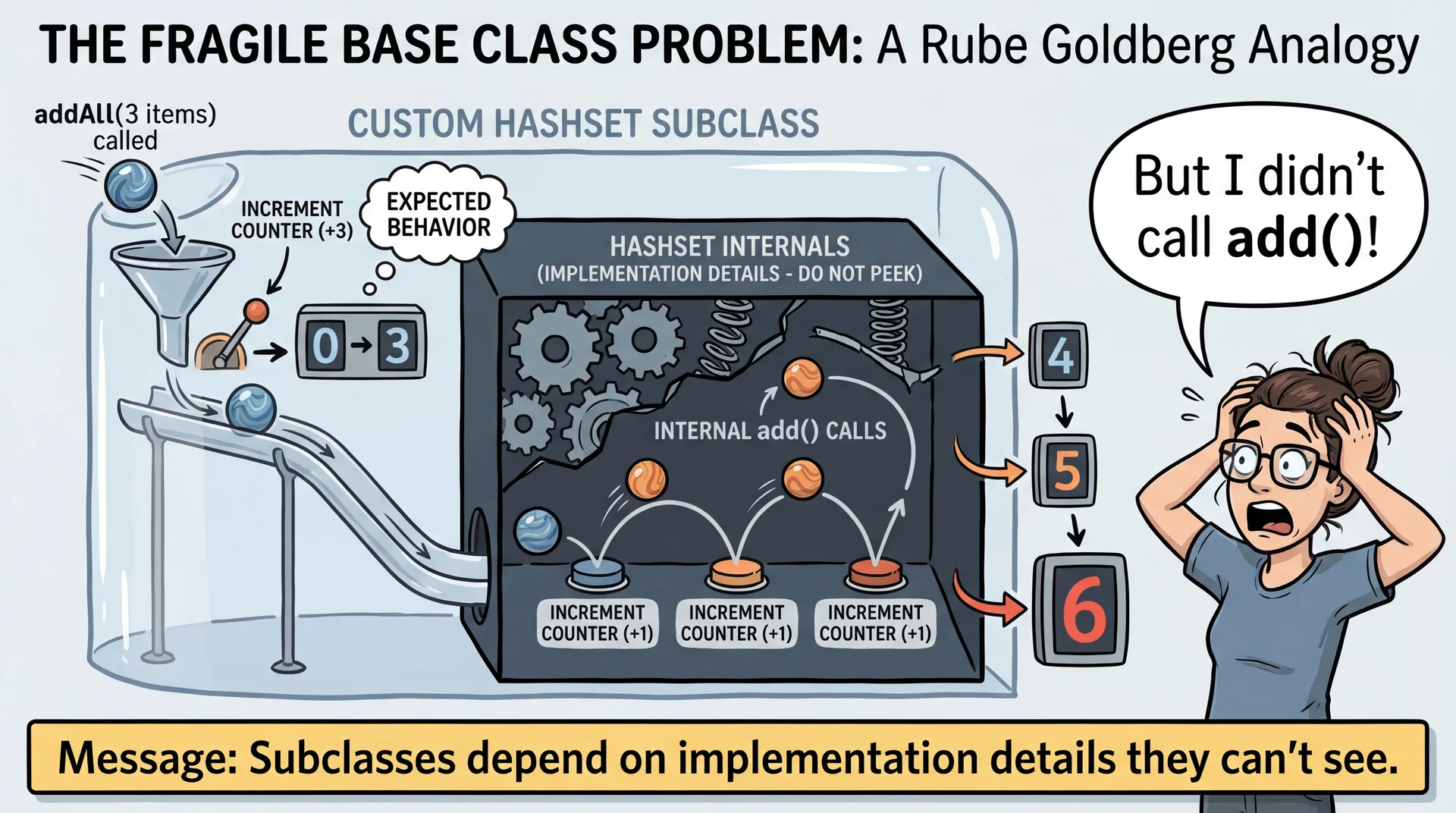
Composition Delegates Without Depending on Implementation
public class InstrumentedSet<E> implements Set<E> {
    private final Set<E> s;        // Composition: HAS-A Set
    private int addCount = 0;

    public InstrumentedSet(Set<E> s) {
        this.s = s;
    }

    @Override
    public boolean add(E e) {
        addCount++;
        return s.add(e);           // Delegate to wrapped set
    }

    @Override
    public boolean addAll(Collection<? extends E> c) {
        addCount += c.size();
        return s.addAll(c);        // Delegate - don't care how it's implemented!
    }

    public int getAddCount() { return addCount; }

    // Forward all other Set methods to s...
    @Override public int size() { return s.size(); }
    @Override public boolean isEmpty() { return s.isEmpty(); }
    // ... etc ...
}
HashSet Class Hierarchy
Composition Keeps Method Calls Inside the Wrapped Object
Inheritance: count = 6 ❌
Composition: count = 3 ✓
Inheritance Requires Explicit Design and Documentation
Effective Java Item 19: "Design and document for inheritance or else prohibit it"
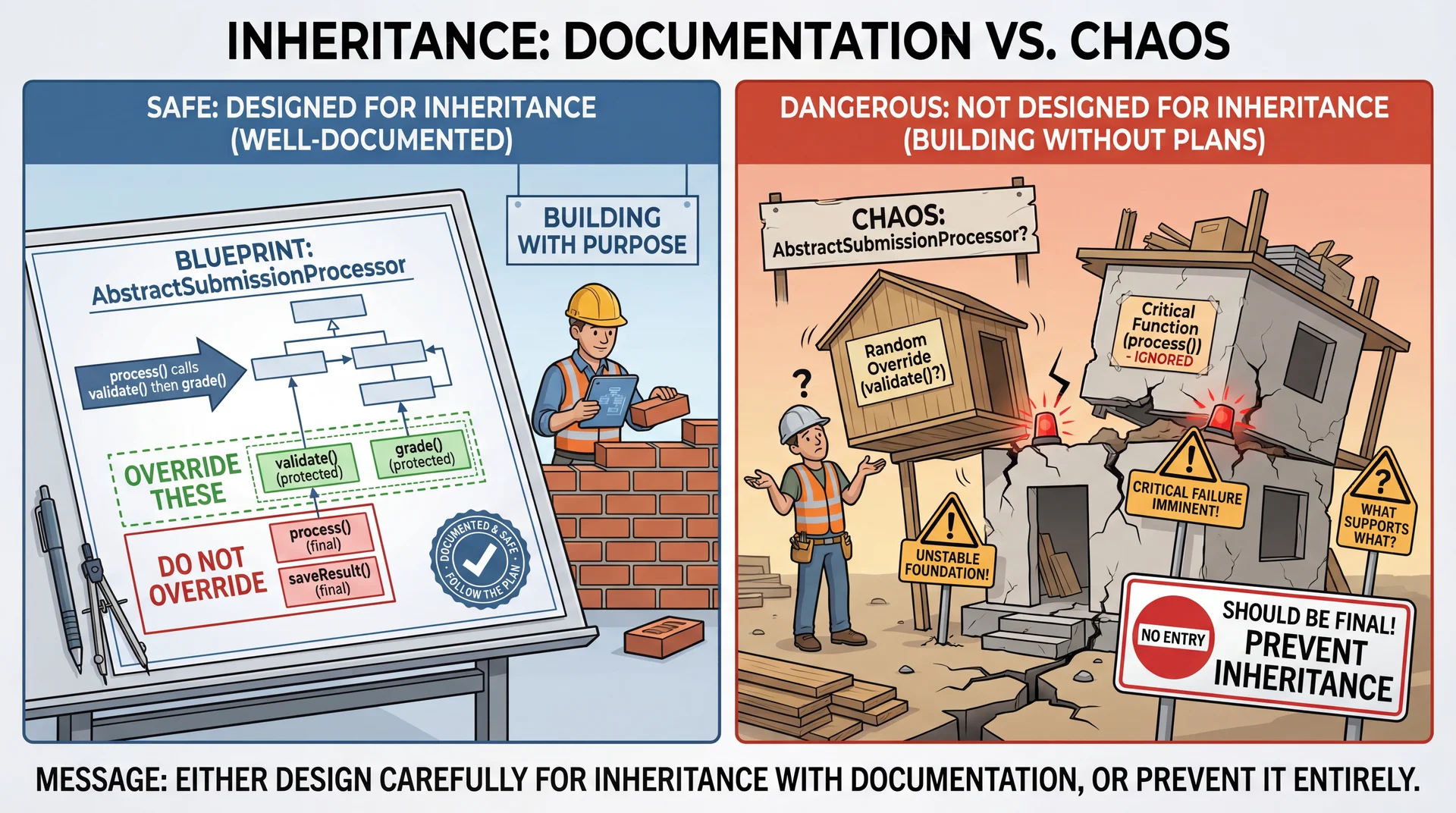
Document Which Methods Call Which Other Methods
public abstract class AbstractSubmissionProcessor {
    /**
     * Processes a submission. This method calls {@link #validate(Submission)}
     * followed by {@link #grade(Submission)} if validation succeeds.
     */
    public final GradingResult process(Submission submission) {
        if (validate(submission)) {
            return grade(submission);
        }
        return GradingResult.invalid();
    }

    /**
     * Validates a submission. Subclasses must override this method
     * to provide language-specific validation.
     */
    protected abstract boolean validate(Submission submission);

    /**
     * Grades a submission. Subclasses must override this method
     * to provide language-specific grading.
     */
    protected abstract GradingResult grade(Submission submission);
}
Most Classes Should Be Final By Default
// Prevent inheritance by making the class final
public final class SubmissionValidator {
    // Cannot be extended - no surprises possible

    public boolean validate(Submission submission) {
        // Implementation details can change freely
        // No subclass depends on them
    }
}
Most classes should be either:
- Explicitly designed for inheritance with thorough documentation, OR
- Declared
finalto prevent inheritance entirely
Design Patterns
Popularized in a 1994 book Design Patterns: Elements of Reusable Object-Oriented Software
Strategy: swap algorithms at runtime via a common interface
Decorator: wrap objects to dynamically add behavior
Template Method: enable subclasses to customize algorithm steps

Decorators Add Behavior Through Composition, Not Inheritance
A structural design pattern that adds behavior to objects dynamically using composition.
Java InputStream
Java I/O Streams Stack Decorators for Flexible Combinations
Wrapping streams:
// Base: read bytes from file
InputStream file = new FileInputStream("data.txt");

// Decorator #1: add buffering
InputStream buf = new BufferedInputStream(file);

// Decorator #2: add primitive reading
DataInputStream data = new DataInputStream(buf);

int value = data.readInt();
Call delegation:
A Visual Decorator Example
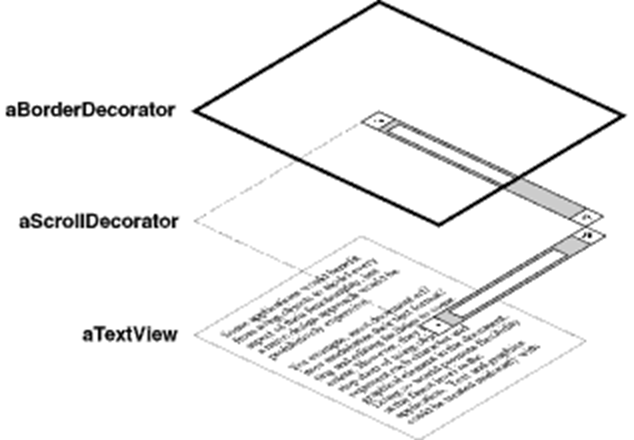
Source: Design Patterns (1994) by Gamma et al., chapter 4
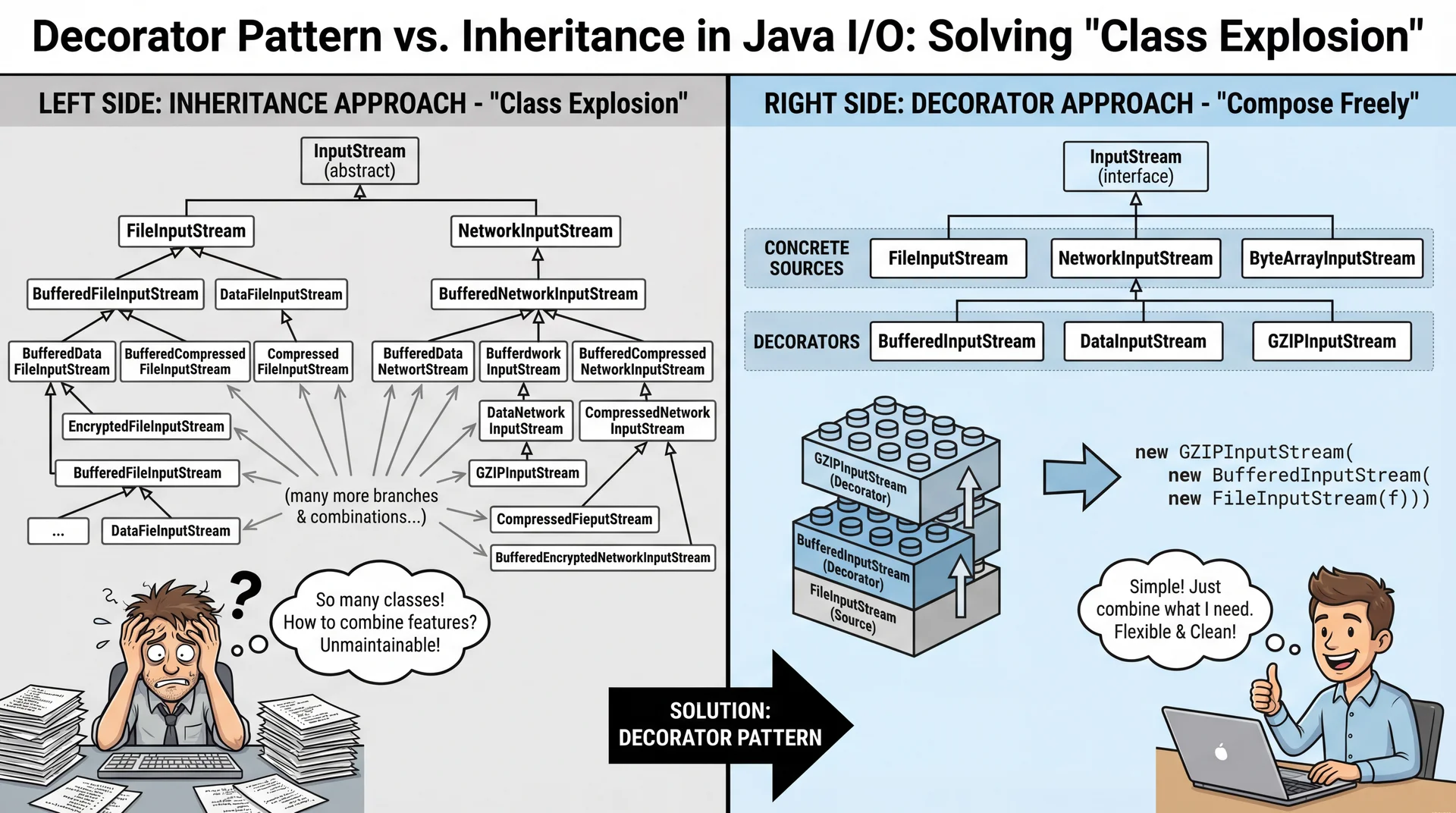
Decorators Avoid the Class Explosion Problem
Decorators Support Good Design Principles
- Single Responsibility Principle: Each decorator does one thing
- Open/Closed Principle: Add new decorators without modifying existing code
- Avoid class explosion: Compose instead of creating subclasses for every combination
Example combinations without new classes:
// Buffered file reading
new BufferedInputStream(new FileInputStream("data.txt"))

// Buffered, compressed network reading
new BufferedInputStream(new GZIPInputStream(new URL(url).openStream()))

// Data reading from bytes in memory
new DataInputStream(new ByteArrayInputStream(bytes))
Decorators Trade Explicitness for Flexibility
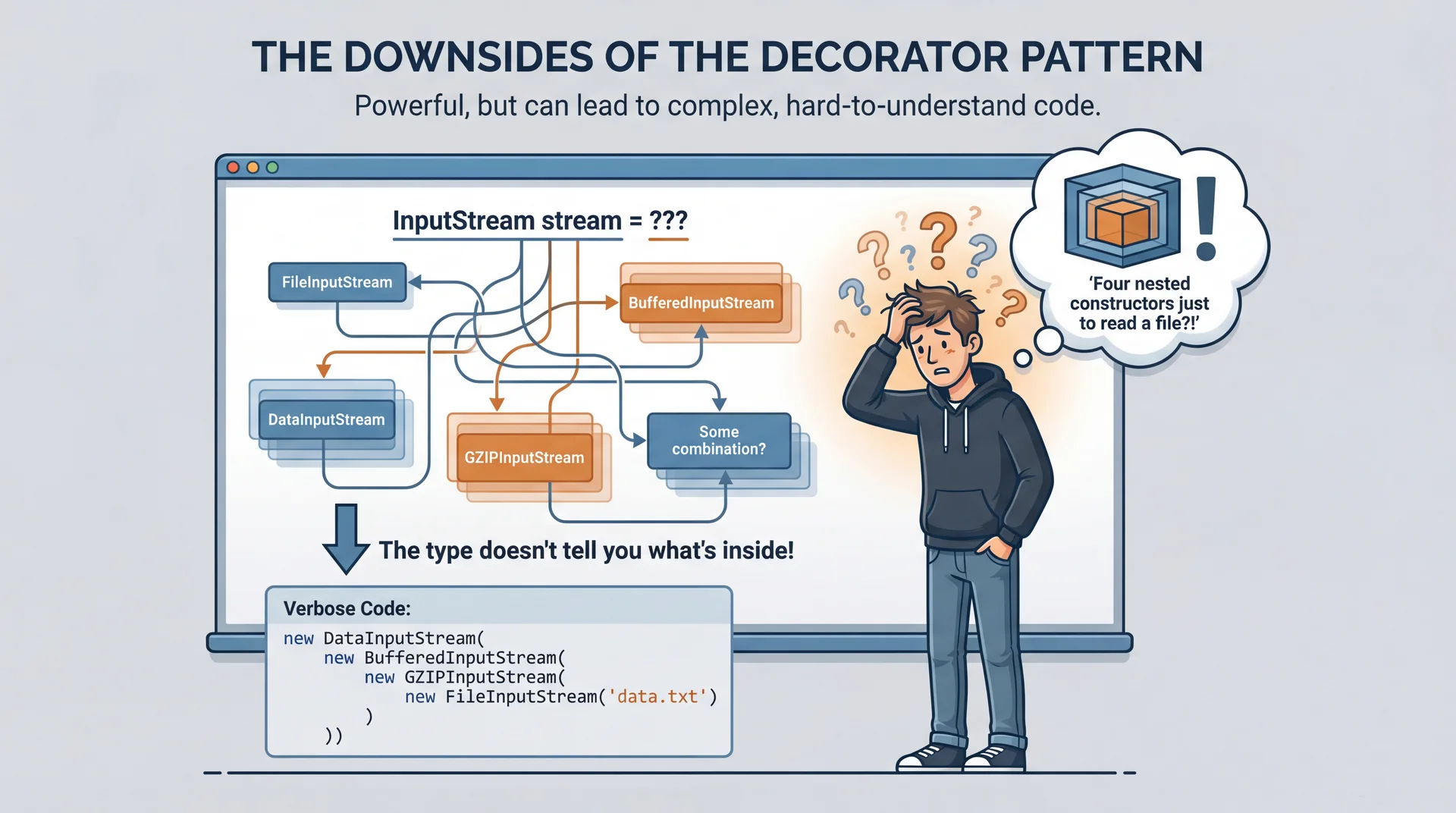
- More verbose: Lots of wrapper instantiation
- Harder to understand: Can't tell capabilities from type alone
- Runtime composition: Structure hidden until execution
Inheritance Works Well for Specific Design Patterns
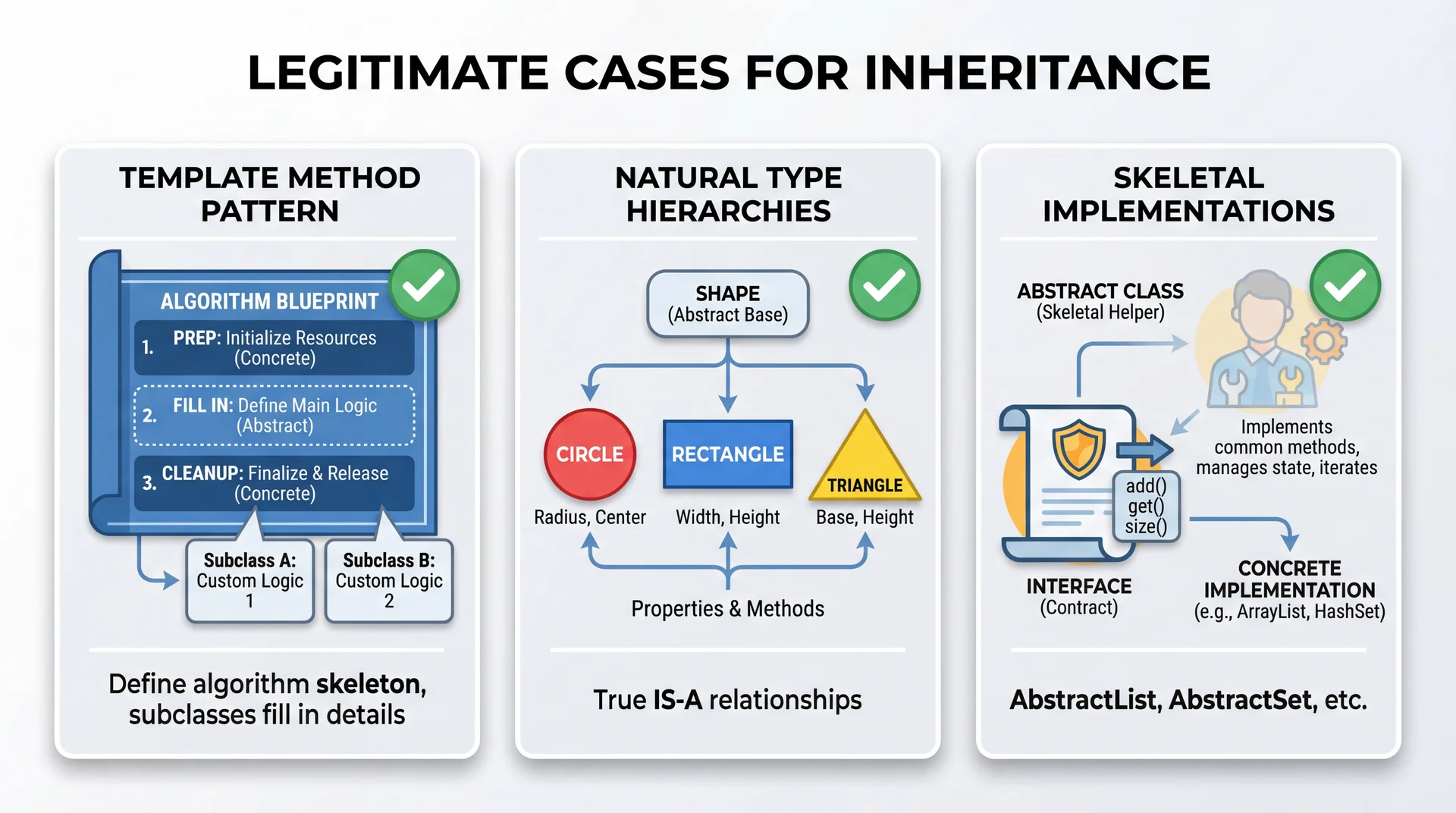
Template Methods Define Algorithm Skeletons That Subclasses Complete
Define the algorithm skeleton in the base class; let subclasses fill in the details.
public abstract class AbstractTestRunner {
    // Template method - defines the algorithm structure
    public final TestResult runTests(Submission submission) {
        setUp();
        try {
            compileCode(submission);
            List<TestCase> tests = loadTestCases();
            TestResult result = new TestResult();
            for (TestCase test : tests) {
                beforeEach();
                result.add(executeTest(test, submission));
                afterEach();
            }
            return result;
        } finally {
            tearDown();
        }
    }

    // Hooks with defaults         // Abstract methods subclasses must implement
    protected void setUp() {}      protected abstract void compileCode(Submission s);
    protected void tearDown() {}   protected abstract List<TestCase> loadTestCases();
    protected void beforeEach() {} protected abstract TestOutcome executeTest(
    protected void afterEach() {}      TestCase test, Submission s);
}
True "Is-A" Relationships Create Stable Hierarchies
public abstract class Shape {
    protected double x, y;  // Position

    public abstract double area();
    public abstract double perimeter();

    public void moveTo(double x, double y) {
        this.x = x;
        this.y = y;
    }
}

public class Circle extends Shape {
    private double radius;

    @Override
    public double area() {
        return Math.PI * radius * radius;
    }

    @Override
    public double perimeter() {
        return 2 * Math.PI * radius;
    }
}
✓ A Circle truly "is-a" Shape. The relationship is stable and meaningful.
Abstract Classes Can Provide Helpful Default Implementations
public interface Light {
    void turnOn();
    void turnOff();
    boolean isOn();
}

// Skeletal implementation - does the boring work
public abstract class AbstractLight implements Light {
    private boolean on = false;

    @Override
    public void turnOn() {
        if (!on) { on = true; activateHardware(); }
    }

    @Override
    public void turnOff() {
        if (on) { on = false; deactivateHardware(); }
    }

    @Override
    public boolean isOn() { return on; }

    // Subclasses implement hardware-specific behavior
    protected abstract void activateHardware();
    protected abstract void deactivateHardware();
}
When to Use Inheritance
- There's a genuine "is-a" relationship fundamental to the domain
- You control both base and subclasses (or trust the base class designer)
- The base class is explicitly designed for inheritance with clear documentation
- You're implementing a well-established pattern like Template Method
- You need to share code between closely related classes
When to Avoid Inheritance
- You're trying to reuse code but there's no natural "is-a" relationship
- The base class wasn't designed for inheritance
- You want to modify behavior of existing classes (use Decorator)
- You want multiple inheritance of behavior (use interfaces with default methods)
- The hierarchy would be deep (more than 2-3 levels is often a smell)
Key Takeaways
- SOLID principles provide guidelines for changeable OO design
- Favor composition over inheritance to avoid the fragile base class problem
- Design for inheritance or prohibit it — document self-use or use
final - Decorator pattern adds behavior through composition, not inheritance
- Use inheritance for template methods, natural hierarchies, and skeletal implementations